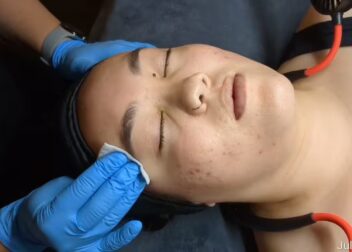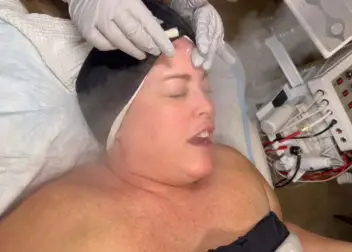

Esthetician, Med Spa, or Dermatologist? Who Does What, and Who You Actually Need
An esthetician treats the surface of your skin: facials, extractions, superficial peels, waxing, and hair removal. A med spa operates under medical supervision and offers injectables, lasers, and treatments that reach below the epidermis. A dermatologist is a medical doctor who diagnoses and treats skin disease, and is the only one of the three who can prescribe.
The short rule: if your skin is unwell, start with a dermatologist. If your skin is healthy and you want it maintained or improved, start with an esthetician. Go to a med spa when you want something specific that requires medical oversight and you have checked who is actually performing it.
Now the detail, because the boundaries are messier than that and the messy parts are where people get hurt.
What an esthetician does
A licensed esthetician works on the epidermis. That is the actual legal line in most states, and it is more useful than any list of services.
In practice this means cleansing, professional skin analysis, exfoliation, extractions, masks, massage, superficial chemical peels, microdermabrasion, dermaplaning in states that permit it, LED therapy, and hair removal by waxing, sugaring, or threading.
What they are genuinely good at, and what people underrate, is assessment. A skilled esthetician looks at your skin, feels its texture, asks what has changed since last time, and builds the treatment in the room rather than following a fixed protocol. The same client does not get the same facial in January and July.
They are also the person most likely to spot that your home routine is the problem. A large share of what walks into a treatment room as “sensitive skin” is a barrier wrecked by over-exfoliation and too many actives introduced too fast. An esthetician who takes things away from your routine is often doing more for you than one who adds a treatment.
What an esthetician cannot do: diagnose, prescribe, or treat disease. If your acne is cystic and scarring, an esthetician can support you but cannot give you what you actually need.
What a med spa does
A med spa sits between a day spa and a doctor’s office, and the gap between the best and worst of them is wider than anywhere else in this industry.
The good ones have a genuine medical director involved, injectors and device operators holding the credentials the state requires, and someone qualified reviewing your history before a needle or laser comes near you. The weak ones borrow the language of medicine without the structure behind it.
Typical services are injectables, laser and light-based treatments, radiofrequency and ultrasound devices, medical-grade peels, and microneedling.
These produce the most visible change of anything in this article, which is exactly why they carry the most risk. Laser settings appropriate for one skin tone can cause burns and lasting pigment changes on another. This is not a small risk and it is not rare.
Before you book anything device-based or injectable, ask three questions:
Who is the medical director, and are they on site?
Who is performing this specific treatment, and what licence do they hold?
How many times have they done this on skin like mine?
A med spa that answers all three easily is one worth booking. Hesitation on any of them is information.
What a dermatologist does
A dermatologist is a medical doctor with several years of specialist training in skin, hair, and nails after medical school. They diagnose, they prescribe, they biopsy, and they perform surgery.
See one when:
You have a mole or lesion that has changed shape, colour, or size, or that bleeds. This is not a wait-and-see situation.
Your acne is cystic, nodular, or scarring. Delaying prescription treatment for severe acne risks permanent scarring, and there is no facial that substitutes for it.
You have persistent redness, cracking, weeping, or anything that looks like eczema, psoriasis, or dermatitis.
Something is not responding to consistent professional care.
You want a treatment that is medical by definition.
A good esthetician will refer you to a dermatologist when you need one. Take that seriously when it happens, because they are turning down your money to give you correct advice.
The line that actually separates them
Forget the job titles for a moment. Regulators mostly do not care what you call yourself. They care about one question: does the treatment penetrate or remove living tissue?
Work on the surface of the epidermis is cosmetology. Anything that punctures, wounds, or destroys living tissue below it is the practice of medicine, regardless of who is holding the device or what the treatment is called on the menu.
That single principle explains most of the rules that otherwise look arbitrary. It is why a superficial glycolic peel is fine and a medium-depth peel is not. Why microdermabrasion is fine and microneedling frequently is not. Why waxing is fine and laser hair removal often is not.
Where it gets genuinely confusing
Here is the part most articles skip, and it is the part that matters.
The same treatment can be legal in one state and illegal in the next, performed by someone holding the identical licence.
Take microneedling. In California, the Board of Barbering and Cosmetology has been explicit that microneedling sits outside the esthetics scope of practice, because it punctures living tissue. A California esthetician cannot perform it, full stop.
In Texas, an esthetician can perform microneedling, but only inside a med spa, under written physician delegation, with documented hands on training and a physician or midlevel practitioner available. The authority comes from the delegation, not from the esthetics licence.
Same treatment. Same qualification. Two completely different answers, and the difference is not competence. It is whether the state allows a physician to delegate.
Dermaplaning is another one. California added it to the esthetics scope from January 2022 under Senate Bill 803, on the reasoning that it exfoliates the epidermis and removes vellus hair without cutting living tissue. Texas takes a different route and requires a Class A Barber licence for razor based dermaplaning.
This is why “can an esthetician do X” has no universal answer, and why anyone who gives you one confidently is guessing.
What this means for you: when someone offers you a treatment that sounds medical, ask what licence they hold and under whose authority they are performing it. Not to be difficult. Because the answer varies by state and you cannot assume.
Choosing by what you actually want
Rather than choosing by provider type, work backwards from the outcome.
Maintenance, texture, general skin health, congestion, mild breakouts. An esthetician, seen regularly. This is the highest-value relationship in skincare and the most underused.
Persistent acne that has not responded to a good routine. Start with a dermatologist for assessment and prescription if needed. Add an esthetician for extractions, supportive treatments, and routine correction alongside it. These two work well together and often should be running in parallel.
Fine lines, laxity, texture change over time. An esthetician for a structured programme of peels, microdermabrasion, and home care. A med spa if you want device-based treatment or injectables, once you have vetted who is operating.
Pigmentation and melasma. An esthetician experienced with your skin tone specifically. A dermatologist if it is stubborn, extensive, or you want prescription-strength options. Be wary of aggressive first-line treatment here from anyone.
Unwanted hair. An esthetician for waxing, sugaring, or threading. For laser, check your state rules on who may operate and ask what device is being used on your skin tone.
Anything that has changed, bled, or will not heal. A dermatologist. Today, not eventually.
Skin affected by cancer treatment. An oncology-trained esthetician, and talk to your oncology team first. Standard esthetics training does not cover the contraindications.
What each one costs
Rough US ranges, useful mainly for spotting outliers.
An esthetician facial typically runs 90 to 200 dollars for 60 to 75 minutes, with specialist protocols higher. A course of peels is usually priced per session with a discount for booking the series.
Med spa treatments vary enormously by modality. Injectables are priced per unit or per syringe, laser per session or per package, microneedling per session. The spread between providers is wide and does not track quality reliably.
A dermatologist visit is billed as a medical appointment, and much of it may be covered by insurance when the reason is medical rather than cosmetic. This is the part people miss: if your acne is genuinely severe, the dermatologist may cost you less out of pocket than a course of facials, because insurance treats it as a medical problem.
Cosmetic work at a dermatology practice is not covered. Medical treatment for a diagnosed condition usually is, at least partially. Worth checking before you assume the doctor is the expensive option.
Using more than one at once
The framing of this article implies you pick one. In practice the best outcomes often come from running two in parallel, and almost nobody sets it up deliberately.
The common pairing is dermatologist plus esthetician for acne. The dermatologist handles diagnosis and prescription. The esthetician handles extractions, supportive treatment, and the home routine, and sees you more often, which means problems get caught earlier. Prescription treatment is also frequently drying and irritating, and an esthetician who knows what you are on can support the barrier through it.
The other useful pairing is esthetician plus med spa for aging and pigmentation. Device work at intervals, maintenance and home care in between.
Two conditions make this work. Each provider needs to know what the other is doing, so tell them. And someone needs to be coordinating, which in practice is usually you.
Say plainly at each appointment: I am also seeing X, and here is what they have me on. A practitioner who reacts badly to that is telling you something.
What to ask, whoever you book
Regardless of which of the three you land on:
What is your licence, and can I verify it?
How often do you treat my specific concern?
What are you recommending for me, and why that rather than something else?
What are the realistic limits of this treatment?
What is the aftercare, and what is the downtime?
What happens if I react badly?
Anyone worth your money answers all six without getting defensive.
The honest summary
Most people need an esthetician more often than they think and a dermatologist less often than they fear, but they need the dermatologist urgently when they need one at all.
Med spas produce the most dramatic results and carry the most risk, and the variable is almost always the operator rather than the technology.
And the single most useful habit you can build is asking who is performing your treatment and under what authority. That one question filters out most of what goes wrong in this industry.
Find a verified professional for your specific concern. Filter by treatment type, specialty, and location.
Sources: