Verified Pro Spotlight: Kelly Wolcott, WiSH Esthetics
Kelly Wolcott has been doing this for more than twenty years, and the thing that struck me when I looked properly at her credentials is how little of it she advertises.
CIDESCO, which is the Swiss international diploma and still the most rigorous general esthetics qualification available anywhere. ITEC. NCEA certification. Oncology esthetics training on top of all that. Named Best Esthetician by Gwinnett magazine. She placed in The Skin Games, which is how she first came onto our radar.
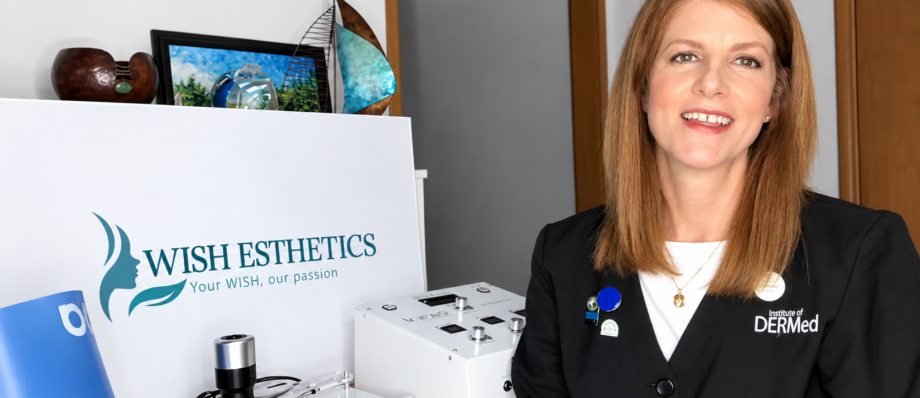
Her practice, WiSH Esthetics, is in Sandy Springs, Georgia. WiSH stands for Wildly Intense Skin Health, which tells you something about how she thinks about her work.
Why we are starting the series here
When we launched Skin Pro Finder, the question we kept coming back to was what verification should actually mean. Most directories verify that a business exists and pays for a listing. That is a low bar and it is why finding a skincare professional feels like guessing.
Kelly is the kind of practitioner the whole thing was built for. Two decades of practice, international credentials most clients have never heard of, oncology training that almost nobody in her area offers, and a solo practice that gets found mainly by word of mouth. In a search results page she is competing with med spa chains that have larger advertising budgets and a fraction of her training.
That gap between how good someone is and how findable they are is the problem we are trying to close.
Describe your path into esthetics
My path to esthetics began as a client. In my early twenties, after having a baby, I struggled with acne. My hairstylist suggested I see an esthetician, and my response was, “What’s that?” I had never even heard of a facial, much less understood how professional skin care could help me.
Working with my esthetician changed that. My skin cleared, and I learned how much my home care and lifestyle choices contributed to that improvement. The experience helped me understand my skin and feel more confident caring for it. That education stayed with me.
I fell in love with a profession that brings together so many of my interests: caring for others, chemistry, biology, psychology, and business. There is science behind what we do, but there is also a very human relationship at the center of it. We listen, build trust, and help people make sense of something that can affect how they feel every day. More than 25 years into my career, that combination still keeps me engaged and curious.
Share more about your oncology work]
I first discovered oncology esthetics at a professional networking event. It opened my eyes to an area of care I wanted to understand better, and in October 2011, I completed a three-day oncology esthetics training. Yes, that long ago!
That knowledge has been invaluable in helping me support clients as they navigate changes in their skin during and after cancer treatment. It deepened my understanding of why we need to adapt our approach, ask thoughtful questions, and recognize that what a client’s skin tolerated previously may no longer be appropriate.
For me, this work is about providing thoughtful, individualized care during a time when so much may feel unfamiliar or outside someone’s control. Sometimes the priority is comfort, gentleness, and having a place where they feel heard and cared for.
I have also had opportunities to speak at events and host informational webinars on oncology esthetics. Sharing that knowledge matters to me because estheticians need to understand the ways we can support these clients and the boundaries of our role.
Is there anything you believed 10 years ago about esthetics that has changed?
One thing this profession continues to teach me is to stay open to revisiting what I know. Technology advances, ingredient formulations evolve, and our understanding of skin continues to grow. Experience is valuable, but it does not replace the need to keep learning and asking questions. What has remained unchanged is my desire to help people understand and care for their skin.
One of the biggest shifts over the past decade has been the role of social media. It has become a powerful way to educate, demonstrate our approach, and provide “social proof” of our work. It also requires thoughtful judgment about what we share and how we frame it.
I believe strongly that our content should provide meaningful information to current or potential clients. Our content should provide factual information about skin concerns, home care choices, or questions. These should never become the punchline of a post. We can correct misinformation and explain better options while still treating people with respect. I want someone watching my content to feel comfortable asking for help.
The credentials, and what they mean
For anyone reading who is not in the industry, the acronyms after Kelly’s name are not decoration.
CIDESCO is a Swiss-administered international diploma. It requires substantially more training than any US state licence demands, and comparatively few American practitioners hold it.
NCEA Certified is the National Coalition of Estheticians Associations credential and the closest thing the US has to a recognised advanced standard. It requires 1,200 hours of training or equivalent experience.
ITEC is a British qualification, common among practitioners trained in the UK or Commonwealth countries.
Oncology esthetics training is a separate specialist credential covering how cancer treatment changes skin, which products and modalities become unsafe, and how to work around ports, surgical sites, and lymphedema risk. Standard esthetics programmes barely touch it.
Any one of those is a serious investment. Holding all four is unusual.
What advice would you offer to someone starting out in the field?
Build a strong understanding of the fundamentals. Knowing how skin functions, how to assess what you are seeing, and why you are choosing a particular product or technique will serve you throughout your career. Those foundations help you evaluate new treatments and technologies with more confidence and discernment.
Practice on as many different skin types and conditions as you appropriately can. Every face gives you an opportunity to strengthen your observation, communication, and hands-on skills. Confidence in your touch is essential, and it develops through thoughtful, consistent practice.
Never skip a step. Give consultation, skin analysis, sanitation, and home care guidance the same attention you give the treatment itself. Each part contributes to the quality of care you provide.
Finally, make continuing education a priority from the beginning. I have made a commitment to professional development every year since becoming licensed in 2000. There is always something to learn, something to refine, or an assumption worth revisiting. You do not have to know everything when you start, but you do need to remain willing to learn.
Find Kelly
WiSH Esthetics on Skin Pro Finder
Sandy Springs, Georgia. Specialties include oncology esthetics, advanced microcurrent, and acoustic therapy.
Know a professional who should be in this series? Or want your own practice listed and verified?
