What Is Oncology Esthetics? A Guide for Patients and the Professionals Who Treat Them
Oncology esthetics is skincare delivered by a licensed esthetician with additional training in how cancer treatment affects skin, which products and treatments become unsafe, and when to refer back to the medical team. It exists because chemotherapy and radiation change skin in ways standard esthetics training does not cover, and because a routine facial on skin in active treatment can cause real harm.
If you or someone you love is in treatment and looking for safe skincare, the short version is: yes, this exists, yes it can help, and no, you should not book a standard facial. Talk to your oncology team first, then find someone specifically trained.
Before anything else. We run a directory. We are not a healthcare provider and this is not medical advice. An oncology esthetician is not a member of your medical team, does not treat cancer, and does not replace anything your oncologist tells you. Everything below is written to help you have a better conversation with the people who do treat you.
Why standard esthetics is not enough
Cancer treatment changes skin structurally, not superficially. The barrier thins. Healing slows. Immune function drops on a predictable cycle. Skin that tolerated everything for forty years starts reacting to products it has used for a decade.
A standard facial is built around a healthy barrier and a normal immune response. Steam, exfoliation, extractions, and active ingredients all assume the skin can recover from controlled irritation within a day or two. During treatment, that assumption is wrong, and the consequences run from a bad reaction to an infection risk that genuinely matters when white blood cell counts are low.
The gap is not that standard estheticians are careless. It is that the curriculum does not cover this. Most licensing programmes spend little or no time on oncology contraindications, which means a well-trained, conscientious esthetician can do the wrong thing with complete confidence.
What actually happens to skin
Knowing the specifics helps you describe what you are experiencing, and helps you tell whether a practitioner knows what they are talking about.
During chemotherapy, common effects include severe dryness and flaking, often described as feeling sunburned. Rashes typically appear one to two weeks into treatment and can crust over within a month. Skin may darken, lighten, or take on a yellowish or grey cast. Nails become sore, swollen, or cracked. Hand and foot syndrome causes pain, numbness, and blistering on palms and soles. Eyes get dry, red, and crusted. Photosensitivity increases sharply, so sun exposure that was previously fine is no longer.
During radiation, the treated area develops erythema that can progress from a sunburn appearance to blistering. Burns and moist skin reactions are common in folds and where clothing rubs. Swelling occurs as part of the healing response. Cutaneous growths can develop within the radiated field.
After treatment ends, much of this improves, but not always quickly and not always completely. Sensitivity can persist for months. Pigment changes may take a year or more to settle. Scar tissue from surgery has its own timeline.
The timing rule that matters most
If you take one clinical detail from this article, take this one.
Chemotherapy suppresses white blood cell counts on a cycle, and the lowest point, called the nadir, typically falls roughly 10 to 14 days after an infusion. During that window, the body’s ability to fight infection is at its weakest, and any treatment that could break the skin or introduce bacteria carries disproportionate risk.
Trained oncology estheticians schedule around this. They will ask when your last infusion was, and they will move your appointment rather than work in the wrong window. A practitioner who does not ask about your treatment schedule is not equipped to treat you safely, regardless of how gentle the facial sounds.
Your own cycle depends on your protocol. Your oncology team can tell you where your nadir falls, and that is the conversation to have before booking anything.
What is off the table, and why
The contraindication list is longer than people expect and the reasoning is consistent: avoid anything that breaks the barrier, introduces bacteria, or irritates skin that cannot recover normally.
Commonly avoided during active treatment:
Extractions and exfoliation. Both create micro-injuries in skin that heals slowly and defends poorly.
Heat. Steam and hot water increase inflammation and can worsen already-irritated skin. Lukewarm is the rule.
Alcohol-containing products. Drying skin that is already severely dry.
Active ingredients. Retinoids, acids, and strong actives generally come out of the routine during treatment.
Electrical and light-based modalities. Most are contraindicated, though specifics vary by device and by where someone is in treatment.
Manicures and pedicures. Not skincare exactly, but worth naming, because nail work carries an infection route and nails are frequently compromised during chemotherapy.
Work over the radiated field, and anything applied there without clearing it with the radiation oncology team first.
Massage or pressure over areas at lymphedema risk, particularly after lymph node removal or radiation to nodes. This is a genuine clinical concern rather than caution for its own sake, and it is one of the clearest markers of proper training.
There is also a category of “it depends,” which is where trained practitioners earn their value. Whether a specific gentle treatment is appropriate depends on the protocol, the phase, the individual, and often on what the oncology team says.
What an oncology esthetician can offer
The list of restrictions makes this sound like nothing is possible. That is not the case, and the value is real.
Before treatment starts, preparing the skin and simplifying the routine so it can handle what is coming. This is the most underused window, and the one where a practitioner can do the most good.
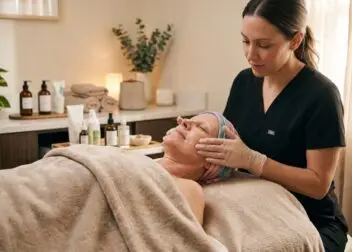
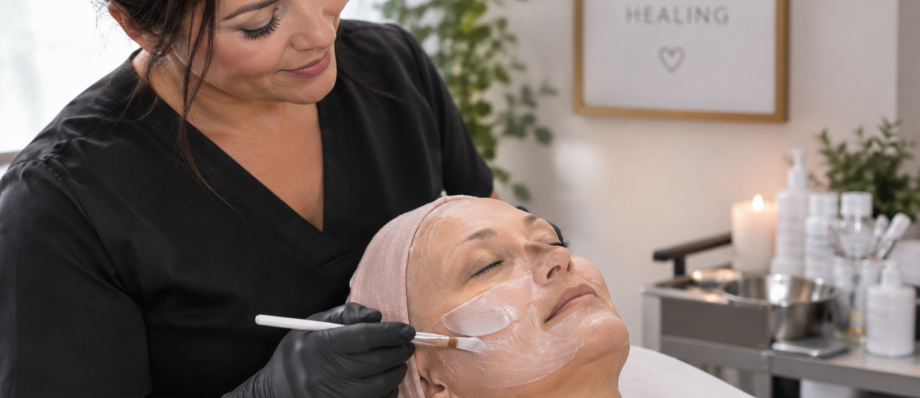
During treatment, gentle hydrating and calming treatments scheduled around the safe window, managing dryness, and supplying products that will not make things worse. Also, honestly, an hour of careful touch from someone unhurried, in a treatment room rather than a clinical setting, delivered by someone who is not frightened of how you look. Patients describe that as significant, and it is not a small thing.
After treatment, supporting recovery as sensitivity settles, addressing pigment changes and texture, and working on surgical scarring in coordination with the medical team.
Throughout, product guidance. Most people in treatment receive an enormous amount of well-meaning, contradictory advice about what to put on their skin. Someone qualified to sort it out is genuinely useful.
How to find one, and what to check
This is harder than it should be. Most directories do not distinguish oncology-trained practitioners from everyone else, which leaves patients and their families phoning spas one at a time and hoping someone knows what they are being asked.
Ask for the specific training. The main US credential comes from Oncology Training International. Morag Currin’s Oncology Esthetics textbook, published by OTI, is the standard reference in the field, and practitioners who trained through that route will recognise it. Other providers exist, including Oncology Spa Solutions. What matters is that they can name where they trained rather than saying they are “experienced with cancer clients.”
Ask about the nadir. If you ask when in your chemotherapy cycle they would schedule you, a trained practitioner will talk about counts and timing. An untrained one will say any time is fine.
Ask what they will not do. Someone properly trained has a clear list and will volunteer it. Vagueness here is disqualifying.
Ask whether they will communicate with your care team. The good ones expect to, and will happily hold off until you have cleared it.
Check the licence anyway. Oncology training sits on top of a state esthetics licence, not instead of one. Verify it through your state board’s free lookup like you would for any practitioner.
Skin Pro Finder lists oncology-trained professionals as a dedicated category and verifies credentials before a listing goes live, which is the reason this category exists at all.
For family members doing the searching
A large share of the people who find articles like this are not the patient. They are a partner, a daughter, a friend, trying to arrange something kind for someone who is exhausted.
Two things worth knowing.
This is a legitimate and useful gift, provided it is booked with someone trained and cleared with the care team. It is not frivolous. Feeling human again matters during treatment, and skin comfort affects daily quality of life more than people outside it realise.
Ask before you book. Timing is unpredictable during treatment, energy is variable, and people in treatment are often managing an overwhelming number of appointments. A gift certificate with no expiry and a note saying “whenever you feel like it” lands better than a booked appointment on a fixed date.
For professionals considering this training
If you are an esthetician reading this, a few honest observations.
The demand is real and the supply is not. Search behaviour shows people actively looking for oncology-trained practitioners and struggling to find them. In most metros almost nobody is claiming this specialty publicly.
It is not a quick add-on. The training covers treatment types, side effects, contraindicated ingredients, service modification across phases, sanitation, communication, and protective equipment. It changes how you work rather than adding a menu item.
The client relationships are different. These are longer, more emotionally weighted, and frequently continue well past treatment. Clients who found you when they needed you most tend not to leave.
You must be comfortable with your own limits. A significant part of the job is knowing when to defer to the medical team and when to decline a treatment someone wants. If you find it hard to say no, this specialty will be uncomfortable.
It is also a genuine differentiator. Positioning is easier when you offer something almost nobody nearby offers, and referrals from oncology nurses, patient support groups, and cancer centres tend to be steady once you are known.
What this cannot do
Being clear about limits is part of doing this properly.
Oncology esthetics does not treat cancer, affect prognosis, or replace anything in your medical care. It does not fix side effects, though it can make some of them more manageable. It does not override your oncology team, and any practitioner who suggests otherwise should be avoided.
It also is not appropriate for everyone at every point. There are phases of treatment where the right answer is no treatment at all, and a good practitioner will tell you that rather than find something to sell you.
Where to start
If you are in treatment or about to be: ask your oncology team whether skincare treatment is appropriate for you and where your safe window falls. Then find someone with named oncology training. Bring your product list and your treatment schedule to the first conversation.
If you are searching on someone else’s behalf: ask them first, choose an open-ended gift certificate over a booked slot, and check the practitioner’s training before you buy.
If you are a professional: look at Oncology Training International, and look at whether anyone in your area is already claiming this.
Common questions
Can I get a facial during chemotherapy?
Often yes, but only with an oncology-trained esthetician, and only after clearing it with your oncology team. Timing matters: treatment is usually avoided around 10 to 14 days after an infusion, when white blood cell counts are lowest. A standard facial during active treatment carries real risk, including infection.
What is an oncology esthetician?
A licensed esthetician who has completed additional certification covering how cancer treatment affects skin, which ingredients and modalities are contraindicated, how to work safely around ports, surgical sites, and lymphedema risk, and when to refer back to the medical team. Standard esthetics training does not cover this in any depth.
Is oncology esthetics a real certification?
Yes. Oncology Training International is the main US provider, and Morag Currin’s Oncology Esthetics textbook, published by OTI, is the standard reference. Other providers exist. Ask a practitioner to name where they trained rather than accepting “experienced with cancer clients.”
What treatments are unsafe during cancer treatment?
Generally avoided during active treatment: extractions, exfoliation, steam and hot water, alcohol-based products, retinoids and acids, most electrical and light-based devices, work over a radiated field, and pressure or massage over areas at lymphedema risk. What remains safe depends on your protocol and phase.
Can I have a facial after finishing chemotherapy?
Usually yes, though skin can stay sensitive for months and pigment changes may take a year or more to settle. Ask your oncology team when they are comfortable, and start with a practitioner who understands what your skin has been through rather than one who treats it as recovered.
How do I find an oncology esthetician near me?
Most general directories do not distinguish them, which is why people end up phoning spas one at a time. Look for a directory with a dedicated oncology category, ask the practitioner where they trained, and ask how they would schedule you around your chemotherapy cycle. The answer to that second question tells you most of what you need to know.
Find an oncology-trained esthetician near you. Credentials verified before listing.