
How to Get More Clients as an Esthetician: The 2026-27 Playbook
The fastest way to get more clients as an esthetician is to fix retention before chasing acquisition. Most solo practitioners lose more clients out the back door than they bring in the front, and rebooking an existing client costs nothing while finding a new one costs time you do not have. After that, the highest-return moves are being findable when someone searches for your specific specialty, and having a bookable presence that does not depend on someone reading your Instagram bio.
That order matters. Most marketing advice for estheticians starts with content and ends with content, which is why so much of it does not work for people who are already busy treating clients.
Start where the leak is
Run this calculation before you do anything else.
Look at your client list from twelve months ago. How many of those people are still coming? Not “have been in once since.” Still on a rhythm.
If the number is under half, you have a retention problem, and no amount of new client acquisition fixes it. You are pouring water into a bucket with a hole in it, and the hole is cheaper to patch than the water is to carry.
Retention in this industry is unusual because the product genuinely works better with continuity. A client on a six-week rhythm gets better skin than the same client coming twice a year, which means retention is not just commercially convenient, it is clinically correct. You can say that honestly, which makes the conversation easy.
The single highest-return habit: rebook before they leave the room.
Not “text me when you want to come back.” Not a follow-up email three weeks later. Card in hand, diary open, before they walk out. Something like: “Based on what we did today I’d want to see you in five weeks. I’ve got Tuesday the 14th at 2, or Thursday the 16th at 10.”
Practices that rebook in-room routinely run 60 to 80 percent rebooking rates. Practices that rely on clients getting in touch run far lower, and the gap is almost entirely about the moment of asking, not the quality of the treatment.
If you do one thing from this article, do that one.
Be findable for what you actually do
Here is the mismatch that costs independent estheticians the most work.
Clients search by concern. “Esthetician for acne.” “Someone who treats melasma.” “Oncology esthetician near me.” “Facial for rosacea.”
Estheticians market by service. “Signature facial.” “Deluxe treatment.” “60 minute glow.”
Those two vocabularies do not meet. Someone searching for help with hormonal acne does not know whether your Signature Facial is right for them, so they scroll past.
Rename what you offer in the language people search. You can keep the pretty name if you want it, but the description underneath needs the words a worried person would type at eleven at night.
Pick a specialty and say it out loud. The instinct is to list everything so you do not turn business away. The effect is that you become nobody’s obvious choice. “I treat acne” brings you acne clients, who tell other people with acne, who arrive already believing you can help. Generalists compete on price and location. Specialists compete on being the right person.
The specialties with the least competition and the clearest demand right now: oncology esthetics, acne, rosacea and sensitised skin, pigmentation on deeper skin tones, and post-procedure and scar care. Oncology esthetics in particular has almost no one claiming it in most metros, and the clients who need it are actively searching and struggling to find anyone.
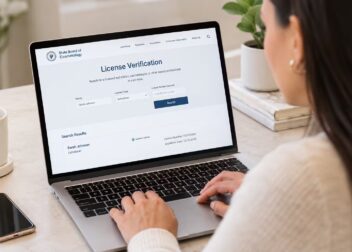
Get listed where people look. Google Business Profile is non-negotiable and free, and it is the single biggest local visibility lever available. Fill it completely, add real photos, choose accurate service categories, and post occasionally. Beyond that, get onto directories that verify credentials rather than just taking payment, because a listing that says “licence checked, oncology trained” does work that a paid ad does not.
Make booking frictionless
Every step between “I want to book” and “I have booked” loses people.
The common failure is a booking flow that requires someone to DM you, wait for a reply, agree a time, and then remember to show up. That works when you are the only option. It does not survive competition.
Online booking with real availability, visible from your profile and your Google listing, removes most of that. A deposit or card on file cuts no-shows substantially, and clients who genuinely intend to come do not object to it.
Two practical points. Make sure your booking system shows what each treatment is for, not just its name and price. And check your own booking flow on a phone, at night, the way a client would. Most people have never done this and are surprised by what they find.
Content that is worth your time
Content is genuinely useful for estheticians and genuinely oversold as the answer. Here is what actually returns.
Before and afters, done properly. Same lighting, same angle, same distance, no filter. These are the most persuasive thing you own. Two disciplines: get written consent, and never imply a result you cannot substantiate. Skincare claims are regulated, and “cleared her acne” is a claim in a way that “twelve weeks of treatment, here is the change” is not.
Teaching content, not product content. Explaining why over-exfoliating breaks the barrier does more for you than a shelf of product photos. Teaching signals expertise. Product posts signal sales.
Answering the questions you get asked all day. Whatever you explain most often in the treatment room is what people are searching. Write that down once and use it everywhere.
Yourself, occasionally. People book a person. Being on camera outperforms product flatlays consistently.
What is usually not worth it: chasing trends unrelated to your work, daily posting for its own sake, and being on five platforms badly. Pick one platform where your clients actually are and be consistently decent on it.
Reviews, and how to actually get them
Reviews are the strongest social proof in local service businesses and most estheticians are passive about them.
Ask in person, at the end of an appointment where the client is visibly happy. Then follow up with a text containing the direct link, because the ask is what works and the link is what converts.
Ask for specifics rather than praise. “If you write one, could you mention what we worked on?” A review that says “she sorted out my hormonal acne after two years of trying everything” is worth twenty that say “lovely experience.”
Reply to all of them, including the bad ones. Reply to negative reviews calmly, without defensiveness and without detail, and take the specifics offline. Prospective clients read how you handle criticism more carefully than they read the criticism.
Price properly
Underpricing is endemic among solo estheticians and it does more damage than most people realise.
It attracts clients who chose you on price and who will leave for a cheaper option. It signals inexperience regardless of your actual skill. And it puts you on a treadmill where the only way to earn more is to work more hours, which caps you at your own physical limits.
Practical approach. Work out what you need per hour to cover rent, product, insurance, tax, unbooked time, and a real income. Compare against what comparable practitioners in your area charge, not against what feels comfortable. Then raise prices on new clients first, and give existing clients notice.
Expect to lose a few. The ones you lose are usually the ones who were most work.
Package courses of treatment where the treatment genuinely requires a course, which for acne, pigmentation, and peel protocols it does. It improves outcomes and it stabilises your income, and it is honest rather than a sales tactic.
Retail without the ick
Retail is where the margin is, and most estheticians hate selling it.
Reframe it. You are not selling product, you are prescribing homecare, and the homecare is most of what determines the result. Clients who leave with the wrong routine undo your work between appointments.
Recommend two or three things that matter for the specific plan you have agreed, explain what each one does and why it is on the list, and let them decide. Do not present a full range. Do not push. The clients most likely to buy are the ones who understand why.
If you genuinely cannot bring yourself to sell, at least write down what they should use, even if they buy it elsewhere. Better results still come back to you.
Where new clients actually come from
Ranked roughly by return on effort for a solo practitioner.
Referrals from existing clients. Highest converting, lowest cost, most underused. Ask directly: “If you know anyone struggling with the same thing, I’d love to help them.” A small thank you for a referral that books works well.
Google Business Profile. Free, high intent, and most practitioners fill it in halfway. Complete it properly.
Verified directory listings. Particularly for specialties. Someone searching for an oncology-trained esthetician is high intent and low competition.
Local partnerships. Dermatologists, hairdressers, and gyms all see your clients. Dermatology referrals in particular work both ways and are undervalued. Introduce yourself properly rather than dropping off cards.
Organic social. Slow, compounding, useful for credibility. Rarely the top of the funnel people expect it to be.
Paid ads. Can work, usually not first. Fix retention, booking, and Google before you spend money sending traffic into a leaky system.
The 90 day version
If you want a sequence rather than a list.
Weeks 1 to 4. Rebook every client in-room. Complete your Google Business Profile fully. Ask ten happy clients for a review with a direct link.
Weeks 5 to 8. Pick your specialty and rewrite your service descriptions in client language. Get listed on directories that verify credentials. Fix your booking flow and test it on a phone at night.
Weeks 9 to 12. Write down the five questions you answer most often and turn each into a post. Review your pricing against real costs. Introduce yourself to one local dermatologist or hairdresser.
None of that requires a marketing budget. Most of it requires deciding to do it.
Surviving the quiet months
Almost every esthetics practice has a slow stretch. For most it is January after the holiday spend, and late summer when clients are travelling and nobody wants a peel before a beach week.
Planning for it beats panicking through it.
Sell forward into the quiet period. Course packages sold in November are appointments booked in January. This is the single most effective smoothing tool available, and it is honest, because acne and pigmentation genuinely need a course.
Reposition rather than discount. Autumn and winter are the right time for peels and resurfacing on the actual clinical merits, since UV exposure drops and skin has recovery time. That is a real reason to book, and it converts better than a percentage off. Discounting trains clients to wait for discounts.
Use the gaps. Slow weeks are when you do the things that never fit otherwise. Rewrite service descriptions. Photograph your before and afters properly. Complete the directory listings you have been meaning to do. Take the training you keep deferring.
Reach back to lapsed clients. People who came three times and drifted are much easier to bring back than strangers. A short personal message, not a bulk campaign, referencing what you last worked on.
The no-show problem
No-shows and late cancellations do more financial damage to a solo practice than almost anything else, because you cannot refill a 90 minute slot at two hours’ notice.
Have a written policy, state it at booking, and enforce it. Card on file with a stated charge for cancellations inside 24 or 48 hours is standard and clients who intend to come do not object.
Send reminders at 48 hours and 24 hours, and make the reminder cancellable with one tap. Counterintuitive, but a client who cancels at 48 hours gives you a chance to refill. A client who cannot easily cancel just does not turn up.
Enforce it consistently, including with people you like. Selective enforcement is worse than no policy, because it teaches your best clients that the rule is negotiable.
The thing worth saying at the end
The estheticians with full books are rarely the ones with the best content. They are the ones who are clear about what they do, easy to find and book, honest about what they can and cannot help with, and consistent enough that clients build a habit around them.
Being known for something specific beats being available for everything. That is true whether or not you enjoy marketing, which most estheticians do not, and which is fine.
Questions estheticians actually ask
How long does it take to build a full book?
Most solo estheticians take 12 to 18 months to reach a consistently full schedule, and the curve is not linear. The first six months feel slow because you are building a base of repeat clients rather than adding new ones. Once retention is working, growth compounds through referrals. People who quit usually quit at month eight.
Should I niche down or offer everything?
Niche down. The fear is that specialising turns business away, but the effect of listing everything is that you become nobody’s obvious choice and end up competing on price and location. “I treat acne” brings you acne clients who arrive already believing you can help. You can still take general bookings while being known for one thing.
How do I raise prices without losing clients?
Raise on new clients first, then give existing clients four to six weeks’ notice with a short, unapologetic message. Do not justify it at length. Expect to lose a few, and expect those to be the ones who were most work for the least money. Practitioners who delay a needed increase usually lose more to burnout than they would have lost to the price change.
Is Instagram actually worth the time?
It is useful for credibility and rarely the top of your funnel. Clients tend to find you through search, referral, or a directory, then check Instagram to decide whether to book. That means it needs to look current and show real results, not that it needs daily posting. One good post a week beats five rushed ones, and being on one platform properly beats being on four badly.
What counts as a good rebooking rate?
Practices that book the next appointment in the room, before the client leaves, tend to run far higher than those relying on clients getting back in touch. Track your own number for a month before chasing a benchmark, because the useful comparison is against yourself. If fewer than half your clients from a year ago are still on a rhythm, fix retention before spending anything on acquisition.
Do I need a website if I have Instagram and a booking link?
You need somewhere you control that shows up in search, which a website does and a social profile mostly does not. If a full site is not realistic yet, a complete Google Business Profile plus a verified directory listing covers most of the same ground for free. What you should not do is make someone DM you to book.
List your practice on Skin Pro Finder. Every listing is manually verified, which means clients searching for your specialty find someone whose credentials have actually been checked.